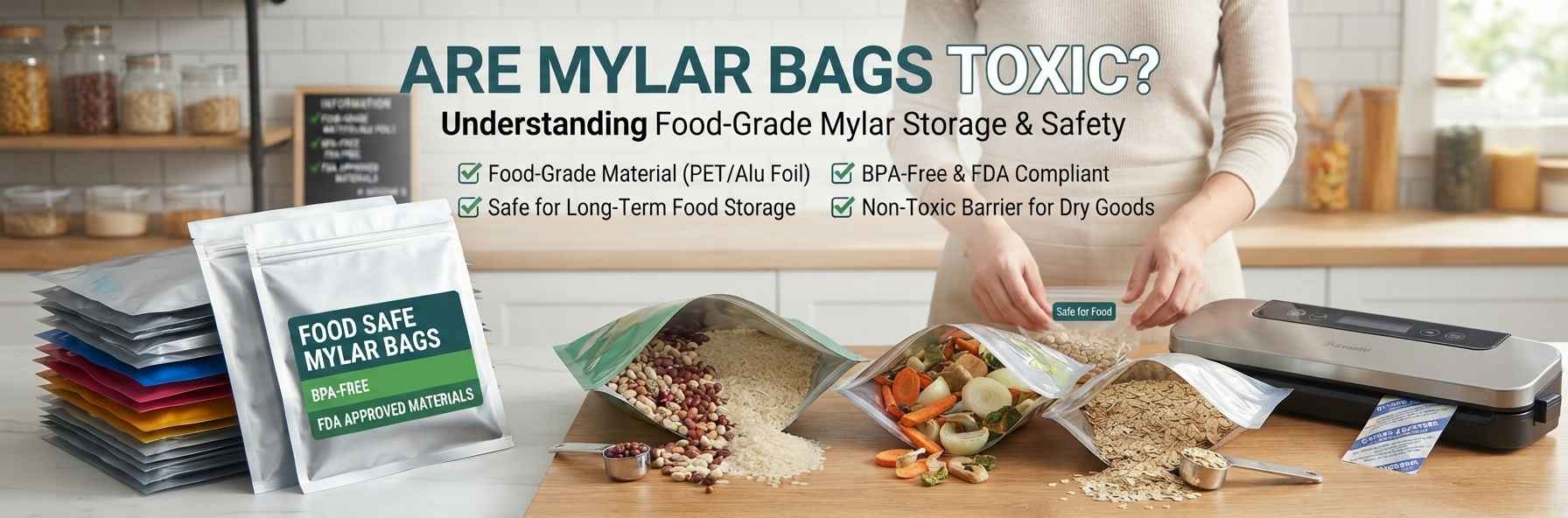
Many people ask are mylar bags toxic when they want to keep food fresh for months or years. This question comes up because the bags look like plastic and shine bright under light. In real life most bags made for food use are safe if you pick the right kind. They have special layers that block air and light so items inside stay good. This article shares clear facts in easy words. You will learn about the material where it comes from and how it acts when heated.
We also talk about reusable sides and common ways people use these bags every day. The details here come from factory tests and normal home experiences. It helps you feel calm when buying or filling bags for your family or small business. Knowing these points stops waste and keeps everything clean. With good choices you can store rice beans or snacks without worrying about safety.
What are Mylar bags made of
What are Mylar bags made of is the first thing to know before worrying about safety. The base is thin polyester film that gets coated with thin metal like aluminum. This metal layer is only a few atoms thick but it works strongly to stop oxygen and light from passing through. Some bags add extra plastic layers for better strength or to allow heat sealing.
The full makeup is tested in labs to make sure nothing bad leaks into food. Normal versions do not have heavy metals or dangerous chemicals that mix with dry foods. Factories follow rules so the final bag meets food contact standards. When you hold one it feels light yet tough because of how the layers bond together.
This construction is why the bags last long on shelf without breaking down. Many users check the label for bpa free or similar marks before buying. Overall the material is stable at room temperature and does not release particles under normal conditions.
Safety Questions People Ask Often
Safety questions come up because folks see the shiny surface and think about chemicals. It is normal to wonder especially if children or pets are around. Here we look at a few direct points with clear answers from real use.
Are mylar bags toxic to humans
Are mylar bags toxic to humans depending on the grade you buy. Food safe ones have passed tests that show they do not leach bad substances into contents. The metal coating stays bonded and does not flake off during normal handling. If a bag is marked for packaging only and not food then better avoid direct contact with edibles.
Most complaints come from using the wrong type like industrial bags for dry goods. When used as directed the risk stays very low according to standard checks. Families who store wheat or oats report no strange tastes after long periods. It is still smart to keep bags away from strong sunlight or extreme heat that could change the material slightly.
Is Mylar toxic when heated
Is Mylar toxic when heated is another frequent worry for those who seal bags at home. The film can handle sealing temperatures without giving off harmful fumes if you stay under recommended heat level. Overheating beyond normal range may cause weak smoke but this is rare in proper tools. Always use short presses and good ventilation in the room.
Food grade versions are made to resist normal sealing heat without breaking down. Tests show that even after heating the bag does not transfer anything dangerous to the food inside. Many home users work with impulse sealers set at medium and have fine results for years. If you smell an odd plastic odor then stop and lower the temperature setting right away. This careful approach keeps everything safe during the process.
Food grade Mylar bags and why they matter
Food grade Mylar bags carry clear labels that tell they passed safety checks for direct contact with edibles. These bags use approved layers that do not mix chemicals with rice sugar or spices. The thickness and coating are picked so oxygen transmission stays near zero which helps food stay fresh. Stores sell them in different sizes for home pantry or emergency kits. When you open a new pack you can smell almost nothing because the material is inert. This type costs little more than basic plastic but gives much better protection.
Many survival groups rely on them because the bags block light that causes vitamin loss in dried foods. Factories test each batch for any possible migration of substances so buyers can trust the mark on the package. For daily use these bags make organizing bulk buys simple and clean. They also work well with oxygen absorbers that remove remaining air after filling. Choosing this grade removes most doubts about are mylar bags toxic in normal kitchen settings.
Are mylar bags reusable
Are mylar bags reusable is a point that saves money for many families. After opening you can clean the inside with dry cloth if no grease or strong smell remains. Some people cut off old seals and make new ones higher up after refilling. The material holds up for two or three uses if handled gently without tears.
Heavy duty versions last longer because the film is thicker. It is important to check for small holes each time before reuse because even tiny punctures lets air in and shortens storage life. For dry items like pasta or beans, reuse works fine.
Wet or oily foods may leave residue that is hard to remove completely so those bags better go to recycle after first use. Many users label each bag with date and content to track freshness. This habit makes reuse practical and safe. Over time the shine may dull but the blocking power stays good if no damage occurred.
What are mylar bags used for in different situations
What are mylar bags used for spreads across homes and small factories? In kitchens they keep coffee beans crisp by blocking air that makes them stale. Campers pack meals for trips because the bags fold flat and weigh little. Small bakeries use them for cookies that stay crunchy for weeks. The light blocking feature protects herbs and spices from losing color and flavor under pantry lights. Some put documents or photos inside for protection from moisture during moves. In craft rooms they hold small parts that need to stay dry.
The bags also appear in seed storage because they stop mold from forming. Their strength lets them handle rough handling in backpacks or storage bins without easy punctures. Many choose them over clear plastic because the metal layer adds an extra barrier against bugs that can smell food from far. This wide range of uses shows the material fits many needs without complicated setup.
Custom options that fit exact needs
When standard sizes do not match, many turn to special orders. Custom food mylar bags come in exact dimensions for bulk flour or sugar with strong seals already tested. They pair well with oxygen removal steps for the longest shelf time.
Custom Resealable Mylar Bags add zip tops so you open and close many times without a new heat seal each visit. This style works nice for snacks that get used slowly. Custom edible mylar bags focus on extra clean production for items people eat directly like dried fruits. The printing uses safe inks that stay fixed even after time passes. custom mylar bags let businesses add logos or instructions directly on the surface so customers know exactly what is inside and how to store it. These made to order choices reduce waste because every bag fits the product perfectly.
Factories that produce them check each detail for safety and strength before shipping. The extra cost pays back through better protection and nicer look on shelves. For anyone with special volumes or shapes these options solve problems that off the shelf bags cannot fix. It also allows matching colors or warnings that fit brand needs.
How temperature and storage affect the material
Temperature plays a big role in how these bags perform over months. In cool dry places they keep their blocking power for years without change. High heat above normal room levels can soften the seal if it was not made strong from start. This is why many store them away from ovens or heaters. Direct sun is also not good because even with a metal layer too much warmth builds inside. Cool basements or closets work best for long term stacks.
When moving bags from cold to warm areas let them reach room temperature first to avoid condensation that could weaken seals. Simple habits like these keep the material working as it should.
Factories that make the bags often list safe temperature ranges on packages so users follow easily. Following those numbers lowers any small risk and makes storage more reliable. Many families rotate their stock every few years to keep everything at peak freshness. This practice plus good location means the bags do their job without extra effort.
Environmental side and proper disposal
The environmental side of these bags gets attention because they combine plastic and metal layers. Most cannot go in normal recycle bins at home because the materials do not separate easily. Some areas have special collection points for mixed films that factories then process into new items.
Reusing as many times as possible is the best first step before thinking about disposal. This reduces new production and landfill load. Brands that care about green choices now look for thinner films that still give good protection. Over time more collection programs appear in cities to handle these bags after use.
For now the smartest path is maximum reuse then find a local recycle option instead of regular trash. This approach matches the long storage life the bags provide. Many users turn old clean bags into organizers for small household items instead of throwing them away. Such creative steps cut waste while still getting full value from each purchase.
Tips for safe daily handling
Tips for safe daily handling start with washing hands before touching open ends. This stops oils from fingers affecting the seal area. Fill bags on a clean surface so no dust enters during packing. Use proper tools for sealing to avoid weak spots that let air sneak in later.
Label every bag with content and date so you use the oldest first. Store away from sharp objects that could poke holes. When opening, do it carefully to keep the remaining seal usable if you want to close again. For big families it helps to have few sizes ready so you match the amount without waste.
Checking bags every few months for any swelling or strange smell catches problems early. These small actions make the whole process smooth and keep food safe longer. New users should start with small batches to learn the feel of good seals and proper fill levels. With time it becomes a natural part of pantry management.
Final Verdict
Many wonder if mylar bags are toxic but facts show that proper food grade ones are safe for normal use. The article covered what goes into the bags, how they handle heat and ways to reuse them without trouble. Choosing the right type for your storage goals makes a big difference in results. Whether for home pantry or small shop the material offers good protection when handled with basic care.
Always look for clear food safe marks and follow temperature advice to avoid any issues. Reusing when possible adds value and helps the environment at same time. With the details shared here you can make smart choices that match your needs exactly.
The bags continue to be popular because they work well and cost reasonable for long term storage. Taking time to understand the material removes doubts and builds confidence in your packing routine. Mylar Bags Online can provide options that fit these safe practices for reliable food keeping.